Image

| Registration Type | Member Price |
|---|---|
| Early Bird Registration (Sept. 11-Oct.3) | $750 |
| General Registration (Oct. 4-Oct.17) | $850 |
| Registration Type | Member Price | Non-Member Price |
|---|---|---|
| Early Bird Registration (Sept. 11-Oct. 3) | $750 | $850 |
| General Registration (Oct. 4-Oct.17) | $850 | $950 |
Not a member? We'd love to have you join us for this event and become part of the Chorus America community! Visit our membership page to learn more, and feel free to contact us with any questions at [email protected].
| Registration Type | Non-Member Price |
|---|---|
| Early Bird Registration (Sept. 11-Oct. 3) | $850 |
| General Registration (Oct. 4-Oct.17) | $950 |
Think you should be logged in to a member account? Make sure the email address you used to login is the same as what appears on your membership information. Have questions? Email us at [email protected].
| Registration Type | Price |
|---|---|
| Individual Session | $30 each |
| All Four (4) Sessions | $110 |
*Replays with captioning will remain available for registrants to watch until November 1, 11:59pm EDT.
Member Professional Development Days are specially designed for Chorus America members. If you're not currently a member, we'd love to welcome you to this event, and into the Chorus America community! Visit our membership page to learn more about becoming a member of Chorus America, and please don't hesitate to reach out to us with any questions at [email protected].
| Registration Type | Price |
|---|---|
| Individual Session | $30 each |
| All Four (4) Sessions | $110 |
*Replays with captioning will remain available for registrants to watch until November 1, 11:59pm EDT.
| Registration Type | Price |
|---|---|
| Individual Session | $30 each |
| All Four (4) Sessions | $110 |
*Replays with captioning will remain available for registrants to watch until November 1, 11:59pm EDT.
Member Professional Development Days are specially designed for Chorus America members. If you're not currently a member, we'd love to welcome you to this event, and into the Chorus America community! Visit our membership page to learn more about becoming a member of Chorus America, and please don't hesitate to reach out to us with any questions at [email protected].
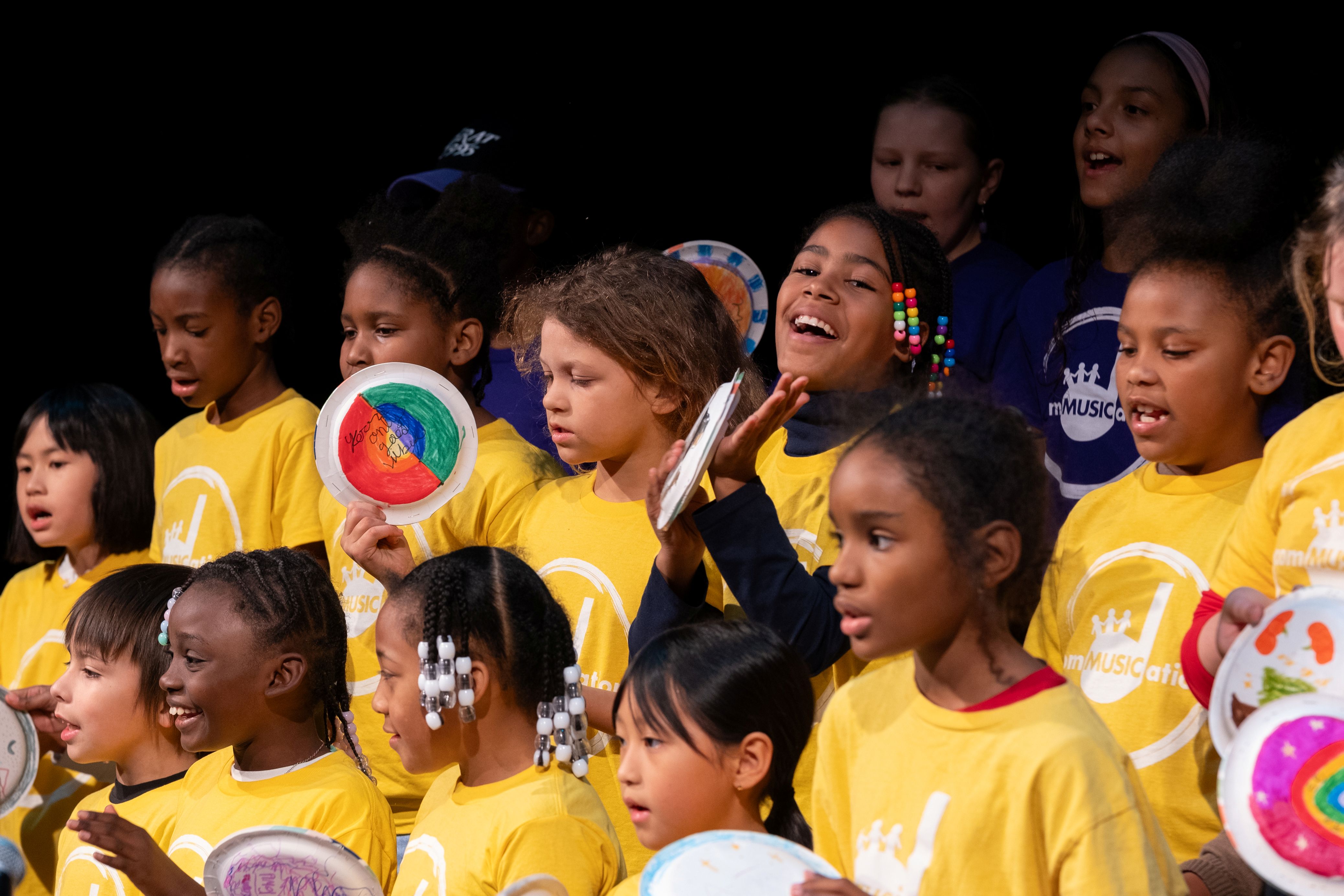
Singing in a chorus does more than make beautiful music. For participants, studies suggest it can boost mood, sharpen the mind, strengthen community ties, and support wellness at every stage of life. For chorus leaders, these research-backed findings offer clear language to communicate the value of group singing to potential members, funders, and community partners.
People have sung together for as long as we know of. Singing even predates human existence, with evidence suggesting that Neanderthals sang. So how has this art form continued to compel us for over 500,000 years? One answer is simple: We do it because it is good for us.
A growing body of research shows that singing has powerful health benefits to our physical, cognitive, and socioemotional health. These effects are even more profound when done in the company of others. Singing can help everyone at any stage of life. It can help kids learn and older adults stay sharp. It’s no wonder then that, in the last several years, choruses have popped up all over the country targeted to populations experiencing both health and disease, with over 50 million people currently participating. These choruses provide a creative outlet, a support network, and a connection to community that few activities can match. Below are just some of the many ways that choral singing can improve our health—as individuals and as a society.
Lifting your voice in song can literally lift your mood. Research shows that singing, especially in a group, has powerful effects on mood and stress. Adults participating in community choruses experience more positive emotions after singing together. Even a single rehearsal can reduce stress hormones like cortisol, helping regulate stress and support overall well-being.
Group singing also boosts “feel-good” brain chemicals such as dopamine and endorphins, which are linked to reward and pleasure. This explains why singing can make you feel happier and more relaxed. Over time, these effects can support long-term emotional well-being. Longitudinal studies of community choruses have found sustained improvements in mood and mental health.
About one in two American adults report feelings of loneliness, prompting former U.S. Surgeon General Vivek Murphy to warn against a “loneliness epidemic” in 2023. The consequences to individual and societal health are dire: Loneliness increases the risk of cardiovascular disease, dementia, stroke, depression, anxiety, and even premature death. Could singing be an antidote?
Singing with a group combats loneliness and improves emotional well-being, as 73 percent of older singers reported in Chorus America’s 2019 Chorus Impact Study that being in a chorus helps them feel less alone. This may be because singing with others synchronizes voices, breath, and movement, creating a shared sense of unity and cooperation. It also gives people purpose—making them feel part of something bigger than themselves. Studies show that people who participate in choruses report stronger social bonds, more meaningful friendships, and greater community engagement than those who don’t sing in groups. Chorus singers are, thus, also active citizens who are working to improve their communities.
The bond from singing together isn’t just in your head—your hormones know it too. Singing can trigger the release of oxytocin, a hormone that regulates bonding, trust, and intimacy. Oxytocin is released during childbirth to help mother-child bonding, but these levels also elevate when mothers sing to their children.
For mothers experiencing postnatal depression, singing can improve bonding and speed recovery. In the Lullaby Project, part of a national program aimed at encouraging childhood development, pregnant women and new mothers are paired with professional artists to write and sing personal lullabies for their babies. These personalized musical experiences strengthen bonds between parents and children and support the health of both, particularly for people experiencing other hardships during pregnancy, like teen pregnancy, homelessness, or incarceration. One testimony from a teen mom read: “The song has made my strong feelings for my son even stronger.”
Singing to your babies not only helps you bond, but it also improves their mood and lays a foundation for early learning. When kids sing, they boost their confidence and become comfortable with their own voices. Kids’ neuroplastic brains are rapidly developing, and singing can accelerate growth and development.
At Northwestern’s Auditory Neuroscience Lab, led by Dr. Nina Kraus, researchers are exploring how music training shapes young brains. They have found that early training helps children develop language and communication skills, setting a solid foundation for literacy. Thus, skills learned in chorus—such as memory, focus, and pattern recognition—can translate into improved academic performance.
Singing is an activity that people can enjoy throughout their lives. Engaging in creative activities in older age has profound physical, mental, and social benefits. Recent data from Chorus America's Chorus Impact Study: Singing for a Lifetime showed that people who sing report higher quality of life and overall health than the general public.
Similar results from the NEA’s “Creativity and Aging” study showed that older adults who sang in a chorus for 90 minutes a week were happier, healthier, and more fulfilled. This study inspired Encore Creativity, a choral arts organization for adults 55 and over. With 50 ensembles nationwide and music genres ranging from folk to Broadway, this organization is just one of many choruses across the U.S. and Canada that offer programs specifically geared to supporting older adults.
Participating in a chorus can provide structure and purpose during retirement while also helping counter the loneliness many older adults experience. Engaging in meaningful and creative activities is essential for long-term well-being and quality of life in later years.
Singing also has profound benefits to memory. Singing engages distinct networks in the brain from speech. This means that singing can remain accessible for people with memory loss even when other language abilities are compromised.
According to Ani Patel, an expert in music cognition at Tufts University, “Music provides a way to access regions of the brain and reawaken autobiographical memory when language won’t.”
Dementia-friendly choruses like those in the Giving Voice Network create joyful choral communities for people living with dementia and their care partners. For people with memory loss who sing in the Chicago-based Good Memories Choir, many report that singing helps connect them to good memories from the past. These programs can increase joy, purpose, and well-being for participants—and they may even slow memory loss in the process.
You might get breathless while singing long, sustained notes, but all that work can pay off. Singing requires deep inhalations, prolonged exhalations, and precise breath control. Controlling exhalations during singing can improve vital capacity, or the maximum amount of air you can forcefully exhale, which makes your lungs more efficient.
These features make singing a great form of respiratory therapy. Singing can help children improve asthma. Clinical programs like Singing for Lung Health can reduce breathlessness and improve respiratory efficiency for individuals with chronic obstructive pulmonary disease (COPD).
Singing doesn’t just improve your breath control, it also strengthens the muscles you use in everyday speech. These include muscles used for verbal articulation, rhythm, and vocal coordination. Practicing these skills in song can help make speech clearer, more fluent, and more expressive. These benefits are why ToastMasters International recently called singing a “secret weapon for confident communication.”
This is especially useful for people with speech impairment. People with Parkinson’s disease (PD), for instance, can experience vocal-respiratory issues like low volume, monotone voice, and inefficient breath support. Singing in a chorus like the Tremble Clefs, a nationwide singing program to address vocal and respiratory issues in PD, can improve speech function in a fun and supportive environment.
If speech is lost altogether, singing can help that too. Melodic Intonation Therapy (MIT) is a rehabilitation technique that utilizes melody and rhythm to help people regain the ability to speak after events like a stroke. If areas of the left hemisphere—the part of the brain normally responsible for speech—are damaged, singing can activate parallel regions in the right hemisphere to support communication. Over time, people no longer need to use the musical elements of speech and can regain speaking ability.
If you’ve ever heard or said the expression, “Stand tall, sing free,” you know why. Efficient breath support requires an upright and relaxed posture that allows air to flow freely. Aligning the pelvis, spine, neck, and head requires engaging the abdominal, back, and shoulder muscles.
In rehearsal, you may find yourself sitting a little taller to support your breath. But if you’re standing in performance, you are also challenging your balance. Balance, strength, and postural decline all contribute to fall risk in older age. Singers do better than non-singers on static postural control tests, suggesting that singing is a whole-body activity that trains proprioception and balance. Singing is also associated with improved body awareness, confidence in movement, and perceived physical functioning among older participants. Taken together, singing may help you stand a little straighter, improve your balance, and move with more confidence.
Singing has been compared to light aerobic exercise. The deep, slow breathing you use during singing helps regulate heart rate and blood pressure. One bout of singing has been shown to improve vascular function for adults in cardiology clinics.
When you sing with others, you also synchronize breathing and heart rhythms. Group singing can improve heart rate variability (HRV), a key indicator of cardiovascular health and stress resilience. Higher HRV is a sign of a healthy, adaptable cardiovascular system that places lower stress on the heart.

But it’s not just airflow that improves when we sing. Singing can also strengthen your immune system. Immunoglobulin A (IgA) is an antibody found on mucous membranes of the respiratory tract. Because IgA lines the tracts at sites of entry to the body, it acts like a first responder to fight infection. Singing increases IgA in the body, even after just one hour of singing. These results may be temporary, but regularly participating in singing consistently engages your immune system to help you fight off infection.
Singing is a universal human trait with powerful benefits to individual and societal health. Accessible and relatively low-cost, anyone can participate by just bringing their voice. Singing uniquely engages your body and brain to help reduce stress, sharpen your mind, and fight disease. Best of all, it’s something you can do in community with others to combat loneliness, build friendships, and connect to a greater purpose.
Choruses all over the U.S. and Canada are giving people a place to create meaningful, expressive artistic experiences. As choral singing also encourages people to become more engaged citizens in their local communities, choruses can be at the frontline of helping us all build the world we want to live in and pass on. The rapid growth of choruses available to anyone—young and old, healthy or ill—is evidence of how meaningful choral experiences are for people. With 54 million American adults currently singing in choruses, one thing is clear: Choruses can benefit us all.
Elinor Harrison is a dancer, choreographer, and movement scientist at Washington University in St. Louis, where she teaches in the Performing Arts Department and directs undergraduate dance studies. Her research explores how arts-based practices can improve health and well-being, especially for people experiencing motor or neurological decline. She is also active in arts-and-health advocacy through leadership roles with international dance medicine and wellness organizations.
